
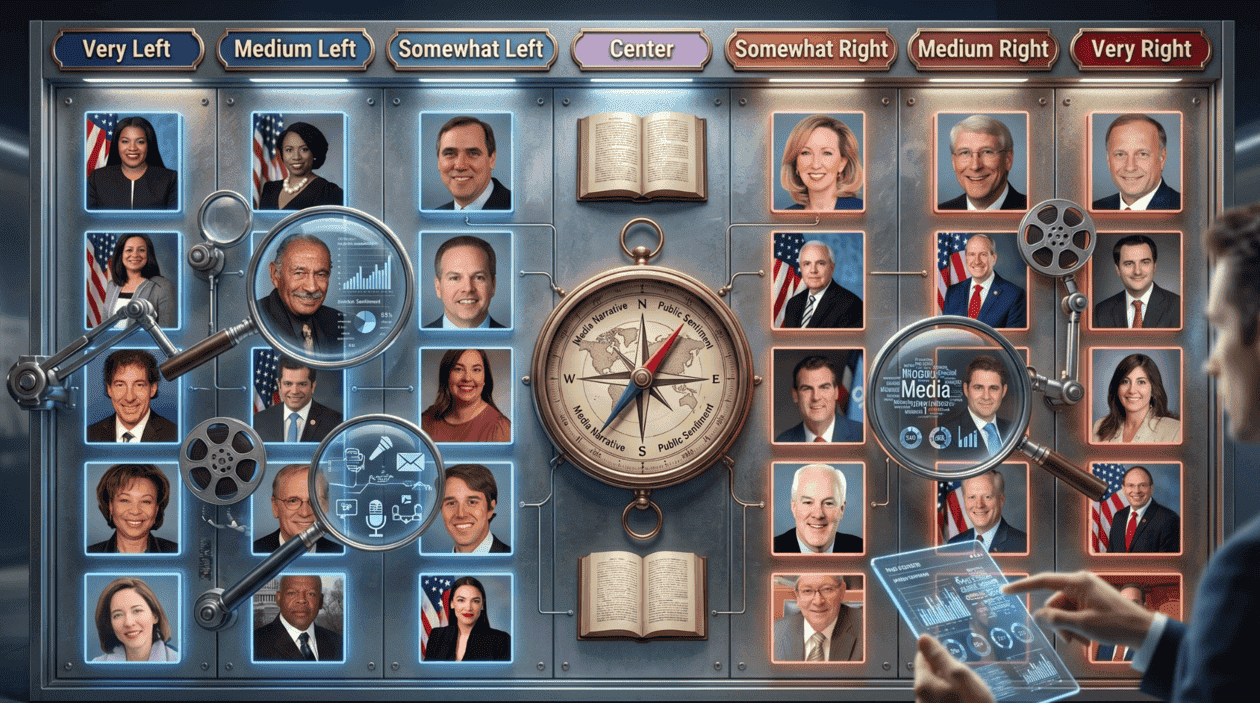
Most voters never meet the politicians they support, oppose, or vote for. They do not attend private meetings, sit in legislative sessions, or observe the countless conversations that shape policy decisions behind closed doors. Yet despite this distance, people often hold strong opinions about political figures. They may view a candidate as trustworthy, dishonest, competent, divisive, inspiring, or out of touch, often long before they have examined a single policy proposal in detail.
This raises an important question: where do these perceptions come from?
The answer is rarely simple. Public opinion is shaped by a combination of news coverage, social media, campaign messaging, personal experiences, political identity, and conversations with family and friends. Together, these influences create narratives that help voters make sense of politicians and political events.
Understanding how those narratives are formed is becoming increasingly important in a media environment where information travels faster than ever, and political reputations can be built or damaged in a matter of days.
Why Perception Often Matters More Than Policy
Political campaigns are frequently discussed in terms of policies, legislation, and governing philosophies. In reality, many voters form impressions of politicians long before they engage with those details.
Few people read lengthy policy documents or legislative proposals. Most encounter politicians through speeches, interviews, debate clips, headlines, social media posts, and news coverage. These interactions create impressions that can be remarkably durable.
Research in political communication consistently shows that voters often evaluate candidates based on traits such as trustworthiness, competence, authenticity, and leadership ability. These judgments frequently influence voting decisions as much as policy positions themselves.
A politician who is perceived as honest may receive support even when voters disagree with certain policies. Conversely, a politician viewed as untrustworthy may struggle to gain support even when voters agree with their proposals.
In many ways, political perception functions as a shortcut. It helps people make decisions in a complex information environment where evaluating every policy position is impractical.
How News Coverage Shapes Political Reputations
For most citizens, the media serves as the primary lens through which politicians are viewed.
Television networks, newspapers, online publications, podcasts, and social platforms all contribute to the public image of political figures. Importantly, they do not simply report events. They also decide which events deserve attention, which quotes are highlighted, and which issues receive sustained coverage.
This process is often referred to as framing.
Framing influences how audiences interpret political events. The same politician may be described as a reformer by one outlet and as a disruptor by another. One publication may focus on economic achievements, while another emphasizes controversy or criticism.
Neither approach necessarily involves inaccurate reporting. The difference often lies in what is emphasized and what is left in the background.
Over time, these choices accumulate. Repeated exposure to similar narratives can shape how voters think about politicians, even if they cannot identify the specific articles or broadcasts that influenced them.
The result is that many voters come to know politicians not through direct observation, but through stories constructed by the media ecosystem surrounding them.
Why Two Voters Can View the Same Politician Differently
One of the most fascinating aspects of political perception is that two people can consume information about the same politician and arrive at completely different conclusions.
Part of the explanation lies in psychology.
People tend to interpret information through existing beliefs and experiences. This phenomenon, often referred to as confirmation bias, leads individuals to give greater weight to information that aligns with their views while dismissing information that challenges them.
Political identity amplifies this effect.
A voter who strongly supports a politician may view a controversial statement as evidence of authenticity and leadership. A critic may interpret the same statement as reckless or irresponsible. The words are identical, but the interpretation differs dramatically.
Media researchers have also documented what is known as the hostile media effect. Studies show that individuals with strong political views often perceive neutral coverage as biased against their position.
This means that public perception is shaped not only by what is reported, but also by how audiences process what they see.
Understanding this dynamic helps explain why political debates often involve competing interpretations of the same events rather than disagreements about entirely different events.
The Growing Influence of Social Media
The rise of social media has added a new layer to political perception.
In previous decades, voters primarily encountered politicians through traditional news organizations. Today, political content spreads through platforms where speed, engagement, and emotion often determine visibility.
A short video clip can generate millions of views within hours. A single quote can become a viral headline. A carefully edited moment from a debate can shape public discussion long after the event itself has ended.
These platforms reward content that captures attention, and attention is often driven by emotion.
As a result, political communication increasingly revolves around memorable moments rather than comprehensive explanations. Politicians are often evaluated based on clips measured in seconds rather than policies measured in hundreds of pages.
This does not mean social media is inherently harmful. It does mean that voters must work harder to separate political performance from political substance.
Why Politician Portrayal Matters
News coverage does more than inform audiences about politicians. It also influences how those politicians are portrayed.
The tone of coverage, the choice of quotes, the experts selected for commentary, and the issues emphasized all contribute to public perception.
Consider how repeated positive or negative portrayals can shape reputation over time.
A politician who consistently appears in stories about economic growth may gradually become associated with competence and stability. Another who frequently appears in stories focused on controversy may become associated with conflict, regardless of the broader context.
These portrayals can become self-reinforcing. Once a public image takes hold, future coverage is often interpreted through that existing reputation.
This is one reason why understanding patterns of coverage is often more valuable than focusing on a single article or news segment. Political reputations are rarely built overnight. They emerge through repeated exposure to narratives that reinforce particular impressions.
Understanding Political Perception Through Data
Political narratives can feel subjective, but modern analytical tools make it possible to examine them more systematically.
Rather than relying solely on anecdotal impressions, researchers can analyze patterns in language, sentiment, framing, sourcing, and media attention. These insights help reveal how politicians are portrayed across different media environments.
This is where a Politician Bias Chart can be particularly useful.
A Politician Bias Chart helps visualize how political figures are portrayed across a broad range of sources. Instead of focusing on isolated headlines, it highlights larger patterns that may not be immediately obvious to readers.
By examining trends over time, readers can better understand whether coverage tends to be positive, negative, balanced, or highly polarized. The goal is not to determine whether a politician is objectively good or bad. The goal is to provide context that helps people evaluate coverage more critically.
Political perception is shaped by patterns. Data helps make those patterns visible.
How Political Consulting Firms Influence Public Perception
Public perception is not simply observed. In many cases, it is actively studied and managed.
That is one reason why a modern political consulting firm plays such a significant role in contemporary campaigns.
Political consultants help candidates understand how voters perceive them and how those perceptions can be improved. They conduct polling, analyze voter sentiment, test campaign messages, evaluate media coverage, and identify communication opportunities.
Campaigns today are increasingly data-driven. Rather than relying solely on intuition, political teams use research to determine which messages resonate with voters and which issues deserve greater attention.
This does not mean political consultants can manufacture public support. Voters ultimately make their own decisions. However, a political consulting firm can help candidates communicate more effectively and better understand the concerns of their audiences.
In many respects, modern political strategy is as much about understanding perception as it is about promoting policy.
How Media Literacy Tools Help Make Sense of Political Narratives
As political communication becomes more complex, media literacy becomes increasingly important.
Most voters do not have time to analyze every article, speech, interview, or social media post they encounter. However, they can develop habits that help them evaluate political information more effectively.
Media literacy tools provide structure for this process. They help readers move beyond instinctive reactions and examine the underlying factors that shape coverage.
Questions such as the following can significantly improve political analysis:
- Who is providing the information?
- Which perspectives are included?
- Which perspectives are missing?
- What language is being used to describe the politician?
- How does coverage differ across sources?
These questions encourage readers to focus less on immediate emotional reactions and more on the broader context surrounding political narratives.
How Biasly Helps Analyze Political Perception
For readers, researchers, educators, campaigns, and political professionals, understanding political perception often requires more than intuition.
Biasly offers tools designed to make political narratives easier to analyze and understand.
Its Politician Bias Chart allows users to explore how politicians are portrayed across different sources and media environments. By examining sentiment, framing, and broader coverage patterns, users can gain deeper insight into how public perceptions are formed.
Beyond analytical tools, Biasly also provides services that support political organizations and candidates seeking a more data-driven understanding of public perception. Through its political consulting capabilities, campaigns can access insights related to media portrayal, voter sentiment, messaging effectiveness, and reputation management.
The goal is not to tell voters what to think or tell candidates what to say. The goal is to provide transparent, evidence-based insights that help all stakeholders better understand the information environment surrounding modern politics.
Whether someone is evaluating a politician, conducting research, or working with a political consulting firm to improve communication strategy, access to reliable analytical data can lead to better decisions.
Becoming a More Informed Voter
Political perception will always be influenced by emotion, identity, and personal experience. These factors are part of how humans process information.
The challenge is ensuring that perception is informed by evidence rather than assumptions alone.
Becoming a more informed voter does not require becoming a political expert. It requires developing a willingness to compare sources, question narratives, and examine how information is presented.
The most effective voters are not necessarily those who consume the most political content. They are often the ones who consume it most thoughtfully.
They recognize that every source provides a perspective. They understand that politicians can be portrayed differently depending on who is telling the story. And they remain open to examining evidence even when it challenges their existing beliefs.
The Stories We Hear Shape the Politicians We See
Most voters encounter politicians through stories long before they encounter them through policy.
Those stories come from news organizations, social media platforms, campaign messages, commentators, friends, and countless other sources. Together, they shape the reputations that influence elections and public debate.
Understanding what influences political perception is not about becoming cynical. It is about becoming aware.
The more voters understand how narratives are created, amplified, and interpreted, the better equipped they are to evaluate politicians on their own terms.
And in a political environment where perception often drives outcomes, that awareness may be one of the most valuable forms of civic literacy a voter can develop.
Leave a Reply