
Key Takeaways
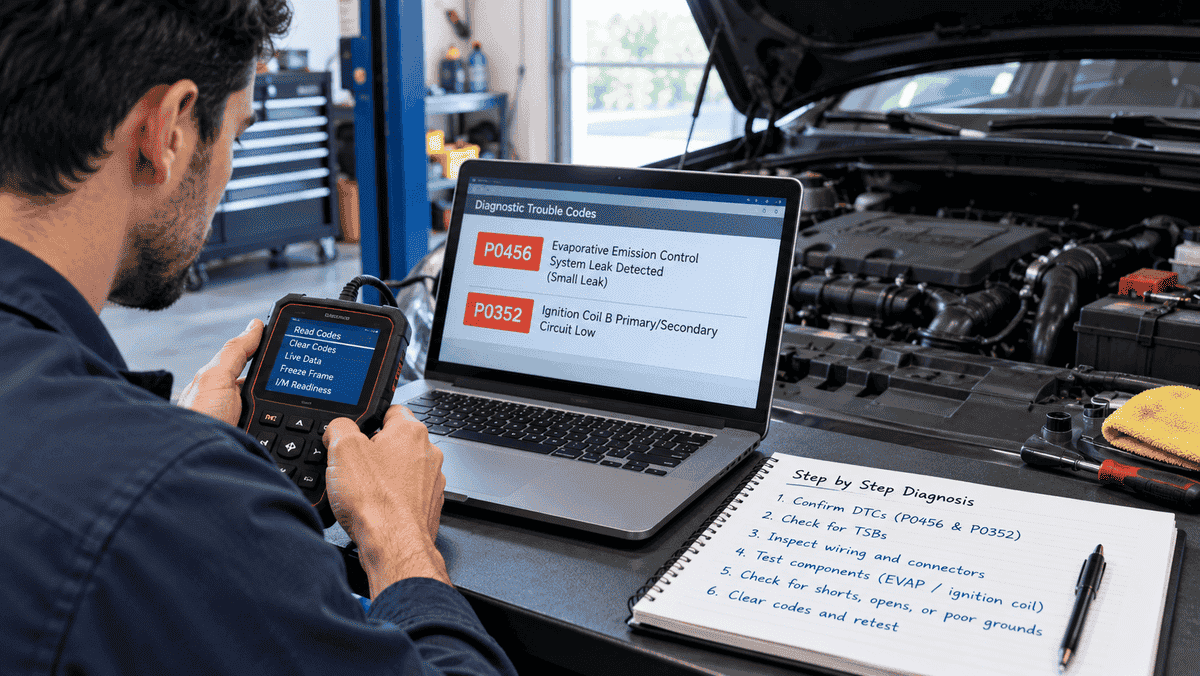
- P0456 points to a very small EVAP leak, and P0352 points to a fault in the ignition coil B circuit.
- The two codes are unrelated, so diagnose each one on its own path.
- Fix P0352 first, since a failing coil can cause misfires that damage the catalytic converter.
- On most coil-on-plug engines, coil B serves cylinder 2, but always confirm with the wiring diagram.
- For the EVAP leak, start at the gas cap and filler neck, then smoke test the full system.
To diagnose P0456 and P0352 step by step, treat them as two separate jobs. P0352 is an ignition circuit fault that can cause a misfire and needs attention first. P0456 is a very small EVAP leak that affects emissions but not how the engine runs. The steps below cover both, in the order that protects the engine and saves diagnostic time.
What P0456 and P0352 Mean
These codes come from unrelated systems. Knowing what each monitor checks keeps you from linking faults that have nothing in common.
P0352 ignition coil B primary or secondary circuit
The PCM switches each ignition coil on and off through a driver circuit. It also watches that circuit for the expected electrical response. When the response for coil B falls outside the expected range, the code sets. On most coil-on-plug engines, coil B serves cylinder 2, though firing order and coil naming vary by manufacturer. A misfire code for the same cylinder, such as P0302, often appears with it.
P0456 EVAP system very small leak detected
During the EVAP leak test, the PCM seals the fuel vapor system and watches how pressure or vacuum holds. A leak as small as 0.020 inch on many systems is enough to set the code. The test often runs only after a cold soak with the fuel level inside a set range.
Why P0352 Comes First
The ignition fault takes priority because it can damage other parts. A coil circuit fault can shut down a cylinder completely.
Raw fuel from that cylinder flows into the exhaust and overheats the catalytic converter. The EVAP leak does not harm any other component, so it can wait until the ignition fault is fixed.
How to Diagnose P0352 Step by Step
Work from the coil outward. Check the part first, then its power, ground, and control circuit.
Confirm the cylinder and check for misfires
Use the wiring diagram to confirm which cylinder coil B serves. Check misfire counters on the scan tool. A matching misfire count confirms the coil is not firing reliably.
Inspect the coil and connector
Remove the coil connector and look for corrosion, bent terminals, oil, or a broken locking tab. Check the coil boot for carbon tracking or cracks. Oil leaking from a valve cover gasket or spark plug tube seal can soak the coil and connector and cause both circuit and misfire faults.
Swap the coil
Move the suspect coil to another cylinder and clear the codes. If the fault moves with the coil, such as P0353 or P0351 now setting, replace the coil. If the original code stays with the original cylinder, the problem is in the wiring or the PCM.
Test power, ground, and the driver circuit
With the key on, check for battery voltage at the coil power feed. Check the ground with a voltage drop test. Then use a scope or a test light to confirm the PCM pulses the control circuit while cranking. A chafed wire where the harness crosses a bracket or the valve cover is a common find. A failed PCM driver is possible but rare, so rule out every wire and connector first.
How to Diagnose P0456 Step by Step
Once the engine runs clean, move to the EVAP leak. Start with the fastest checks and work toward the smoke test.
Inspect the gas cap and filler neck
Confirm the gas cap is the correct part and its seal is soft and uncracked. Check the filler neck lip for rust or pitting, which is a frequent cause on older vehicles.
Smoke test the EVAP system
Connect a smoke machine to the EVAP service port or the filler neck. Command the vent valve closed with the scan tool so the system holds pressure. Inspect the hoses, canister, vent valve, purge valve, and fuel tank sending unit seal. Very small leaks may only show a faint trace of smoke, so use a bright light.
Test the purge and vent valves
Command each valve with the scan tool and confirm it holds when closed. A valve that does not fully seal will cause a leak code even when every hose is tight.
Confirm the repair
Clear the codes and run the EVAP leak test if the scan tool supports it. If not, advise the customer that the monitor needs a cold soak and several normal drive cycles to complete.
Common Mistakes With This Code Pair
The most common mistake is replacing the coil without checking the connector and wiring. If the fault sits in the harness, the new coil sets the same code within days. Another mistake is clearing the EVAP code after a gas cap swap without running the leak test. The customer then returns when the light comes back, and the shop absorbs the second visit.
Quote the Jobs Separately
Because the codes are unrelated, quote them as two line items. The coil repair is usually quick once the fault is isolated. The EVAP leak can take longer to find, and a clear estimate keeps the customer informed if the smoke test takes more than one attempt.
Diagnose Both Faults Faster
Coil circuit faults and very small EVAP leaks both follow patterns on specific vehicles. Identifix Direct-Hit gives your technicians confirmed fixes for P0456 and P0352 by make, model, and engine, so they can see the most common cause before testing starts. Look up the vehicle in Direct-Hit first and spend your diagnostic time where the fix is most likely to be.
Leave a Reply