
Category: Software
-
Modern cybersecurity frameworks increasingly focus on eliminating legacy cryptographic algorithms that no longer meet security standards. One of the most widely discussed among them is RC4, a stream cipher once heavily used in SSL/TLS, WEP, and various proprietary systems. Although it has been deprecated in most secure implementations, it still appears in older infrastructure, misconfigured…
-
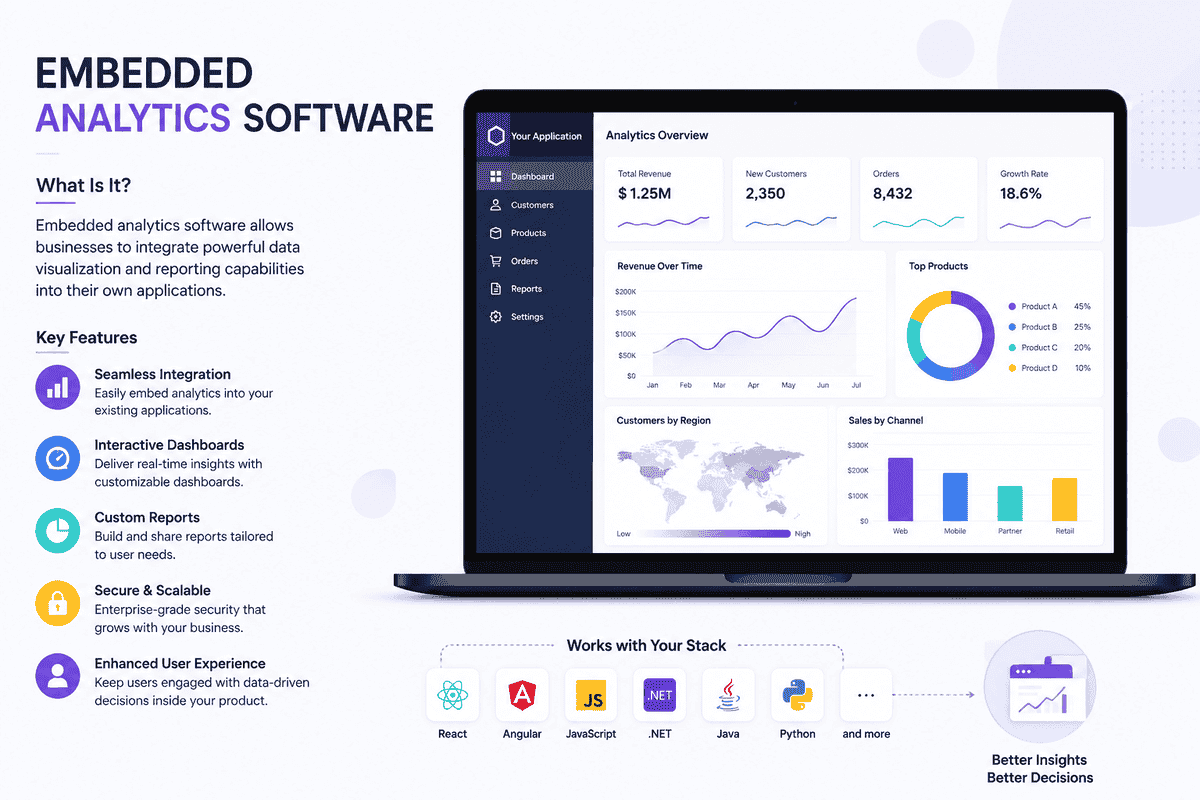
In today’s data-driven business environment, organizations need quick and easy access to insights without switching between multiple applications. This is where embedded analytics software becomes invaluable. Embedded analytics integrates data visualization, reporting, and analytical capabilities directly into business applications, allowing users to access meaningful insights within their existing workflows. Whether used in customer relationship management…
-

Manual Testing Creates Inevitable Bottlenecks In the fast-paced world of SaaS, manual testing quickly becomes a major roadblock. As products grow and change with each release, the sheer volume of scenarios to check becomes unmanageable. This means longer test cycles, which inevitably slow down how quickly new features can reach users. The result is a…
-

In today’s fast-paced digital landscape, data alone is no longer enough. Businesses need timely, contextual insights that empower users to make better decisions—without disrupting workflows. This is where embedded analytics solutions come into play. By integrating analytics directly into applications, platforms, or software products, embedded analytics transforms raw data into actionable intelligence exactly where users…
-

In 2026, a business website is more than just a digital brochure. It is a performance-oriented platform that defines first impressions, builds trust, and subtly directs visitors to take action. Those businesses that consider their online presence as infrastructure, and not as decoration, reap the benefits of increased visibility, conversions, and loyalty. Today, progressive businesses…
-

Key Takeaways Why We Started Tracking Platform Performance Metrics In August 2025, I realized we were building platforms in the dark. We had opinions about what worked in custom software development for real estate industry projects. We had client testimonials. We had case studies. What we didn’t have was systematic data across enough deployments to…
-

Poor call quality in Microsoft Teams is one of the most common complaints raised by employees in modern enterprises. Choppy audio, delayed responses, robotic voices, dropped calls and inconsistent video quality are reported even in organisations that have invested heavily in cloud migration and modern collaboration tools. What makes this issue particularly frustrating is that…
-

Data analytics plays a pivotal role in shaping the strategy and growth of any modern SaaS business. The ability to capture, analyze, and act on data can make the difference between a thriving company and one that struggles to keep up with the competition. With vast amounts of data flowing in from multiple sources, user…
-

Software development is no longer a domain reserved exclusively for engineers. Over the past few years, low-code and no-code platforms have dramatically lowered the barrier to building applications, and the introduction of AI is accelerating this shift even further. Together, these technologies are redefining who can build software, how fast it can be built, and…
-

Cloud adoption is no longer a question of if but how. Most large enterprises already run parts of their infrastructure in the cloud, yet many modernization initiatives fail to deliver the expected outcomes. The reasons being: · Costs rise faster than anticipated · Performance issues persist · Engineering teams struggle to maintain…