
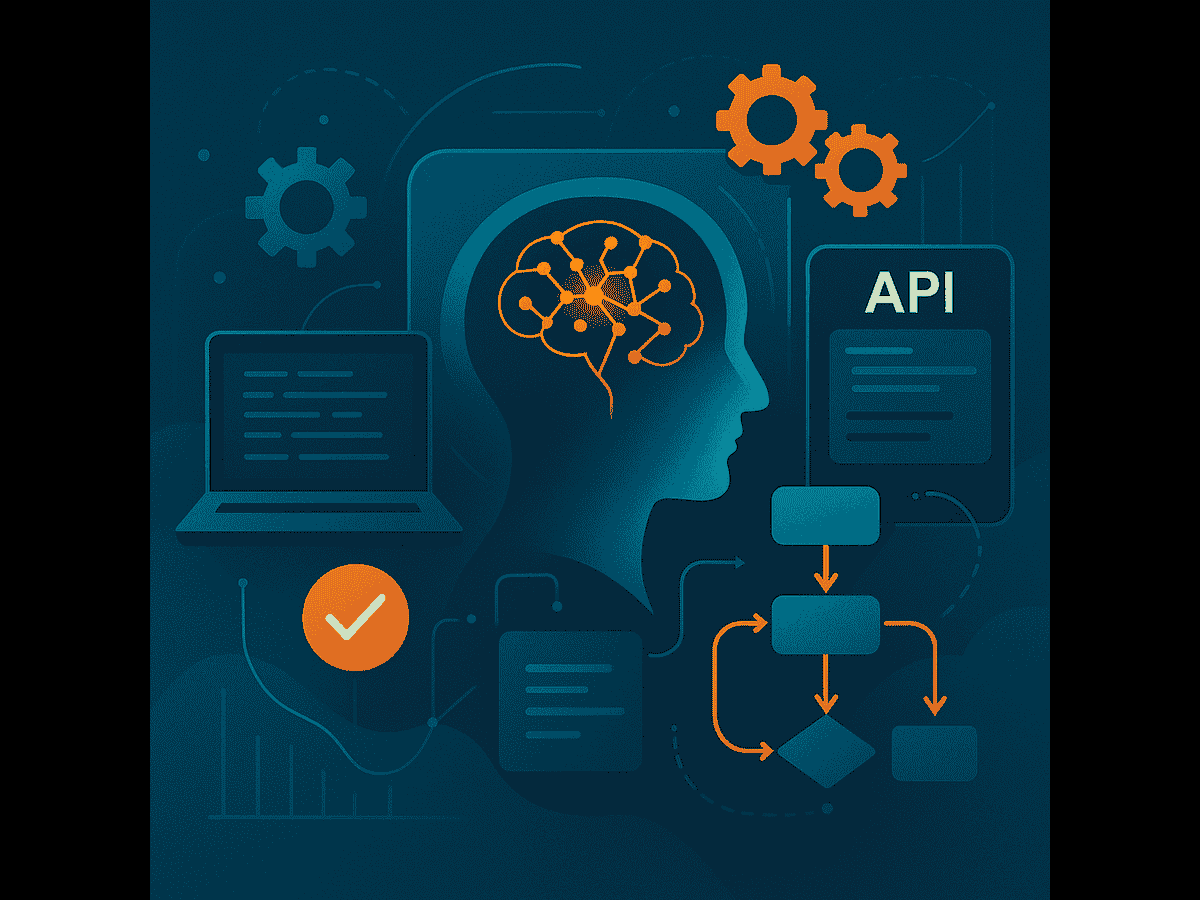
The field of artificial intelligence is changing dramatically due to agentic AI, which is changing how APIs are developed and managed. Understanding the ramifications of this revolutionary technology becomes crucial as companies and developers negotiate the challenges of digital transformation.
Agentic AI introduces autonomous, goal-oriented agents that can comprehend context, make adaptive decisions, and drive results in real time, marking a significant shift from traditional, static AI models. This paradigm change has the potential to completely transform the design, development, and administration of APIs, opening up new possibilities for productivity, customization, and creativity.
What is Agentic AI?
AI has advanced significantly with the transition from passive models to autonomous, goal-oriented agents. Agentic AI systems differ from their static counterparts in that they can comprehend context, make adaptive decisions, and display goal-driven behavior.
Agentic AI is based on a potent combination of real-time decision-making, reasoning, and natural language comprehension. These dynamic agents can understand and respond to complex questions, evaluate large volumes of data, and independently choose the best course of action to achieve desired results.
Agentic AI’s effects on API creation and administration
1. Facilitating Adaptive and Intelligent API Communication
Agentic AI transforms how APIs interact with people and systems by providing dynamic, contextual, and personalized replies. With effective Agentic AI integration, APIs evolve into adaptive systems that continually refine their behavior based on real-time context. By using AI agents, APIs may provide real-time, tailored experiences, intelligently understand user intent, and adjust to specific demands.
Additionally, agentic AI can independently optimize API security, scalability, and performance, guaranteeing that APIs run as efficiently as possible and are resilient to changing demands. In today’s fast-paced digital environment, when responsiveness and agility are critical success factors, this degree of flexibility and self-optimization is important.
2. Orchestration and automating intricate API processes
The capacity of agentic AI to automate intricate workflows and coordinate multi-step procedures is one of its most important benefits in API management. AI agents can autonomously manage intricate API operations, dynamically route requests based on context and priority, and proactively detect and resolve issues to ensure optimal reliability.
In addition to streamlining API management and development, this automation gives developers more time and resources to concentrate on higher-level work and creativity, while AI integration companies help organizations implement these autonomous workflows at scale. By assigning AI agents to perform repetitive and time-consuming tasks, businesses may accelerate their API development cycles and better serve their clients.
Benefits of using agentic AI in API development
There are a few advantages to incorporating agentic AI into API development, which enable companies and developers to reach new heights of productivity, creativity, and client satisfaction.
Increased accuracy and efficiency: Agentic AI automates processes, reduces errors, and maximizes efficiency, resulting in faster and accurate API creation.
Improved developer experience: By streamlining the developer workflow and offering intelligent recommendations, code completion, and real-time mistake detection, AI-driven tooling and assistive technologies ultimately increase productivity and shorten development times.
Scalability and adaptability: APIs can dynamically grow and adapt to changing requirements thanks to agentic AI, ensuring optimal performance and dependability even in the face of fluctuating workloads and evolving specifications.
Consequences for Governance and API strategy
API strategies and governance frameworks need to be reassessed to fully realize the potential of agentic AI while addressing ethical, security, and accountability concerns.
When creating and implementing AI-driven APIs, organizations must prioritize explainability, openness, and human oversight to incorporate agentic AI into their API strategies. Establishing specific standards for security, ethics, and data protection is essential to ensuring that AI agents operate within well-defined parameters and align with business values.
To handle the unique challenges posed by agentic AI, API governance frameworks must also adapt. These challenges include monitoring and auditing AI decision-making processes, guaranteeing compliance with relevant legal requirements, and maintaining accountability for the actions of AI agents.
Getting API ecosystems ready for the agentic AI revolution
1. Purchasing tools and infrastructure for AI-focused APIs
Developing infrastructure that smoothly incorporates AI capabilities into their API ecosystems must be a top priority for organizations looking to maintain their competitiveness.
This means selecting state-of-the-art platforms designed to manage the complexities of agentic AI, ensuring that systems can advance in step with new technological advancements. By directly incorporating AI capabilities into the heart of API systems, businesses may achieve previously unheard-of levels of intelligence and agility.
2. Building a workforce skilled in AI and APIs
The move towards proactive AI demands a team that is knowledgeable about the latest AI and API technologies. Offering ongoing training and educational initiatives in advanced AI techniques will enable staff to capitalize on AI advancements, enhancing productivity and growth. Training should cover not just technical competencies but also the effects of AI on business strategies and development methods.
Nurturing a cooperative culture is essential to realizing the complete potential of proactive AI. Promoting teamwork among developers, AI experts, and business executives can yield comprehensive solutions that tackle intricate challenges with creativity and accuracy. By creating a setting that prioritizes innovation and constant inquiry, organizations can inspire teams to explore the limits of what can be achieved with proactive AI, ultimately resulting in innovations that transform the API industry.
Conclusion: Agentic AI’s long-term potential for API innovation
Agentic AI is set to usher in a transformative era in adaptive API ecosystems as the digital realm grows, leading to a systematic improvement in their performance. These systems will employ state-of-the-art predictive analytics to anticipate and address potential issues before they impact functionality, guaranteeing uninterrupted operations. By incorporating advanced algorithms, APIs will flexibly respond to changes in demand and environmental factors, creating a setting of ongoing improvement and robustness.
The opportunity for cooperation among AI agents within these ecosystems opens up new paths for API capabilities. AI agents will use sophisticated communication methods to align their actions, enabling intricate interactions across various platforms. This collaborative approach will allow APIs to operate more comprehensively, coordinating activities and enhancing processes throughout interconnected networks, ultimately improving efficiency and performance.
Integrating agentic AI into blockchain and edge computing structures could transform how data is managed and secured within distributed environments. Blockchain’s unchangeable ledger offers a foundation for transactions, increasing trust and reliability in AI-driven transactions. Simultaneously, edge computing will enable immediate data processing at its source, reducing latency and improving the reactivity of AI applications. This combination will foster new possibilities in sectors such as IoT and smart cities, where immediate processing and security are crucial.
Leave a Reply