
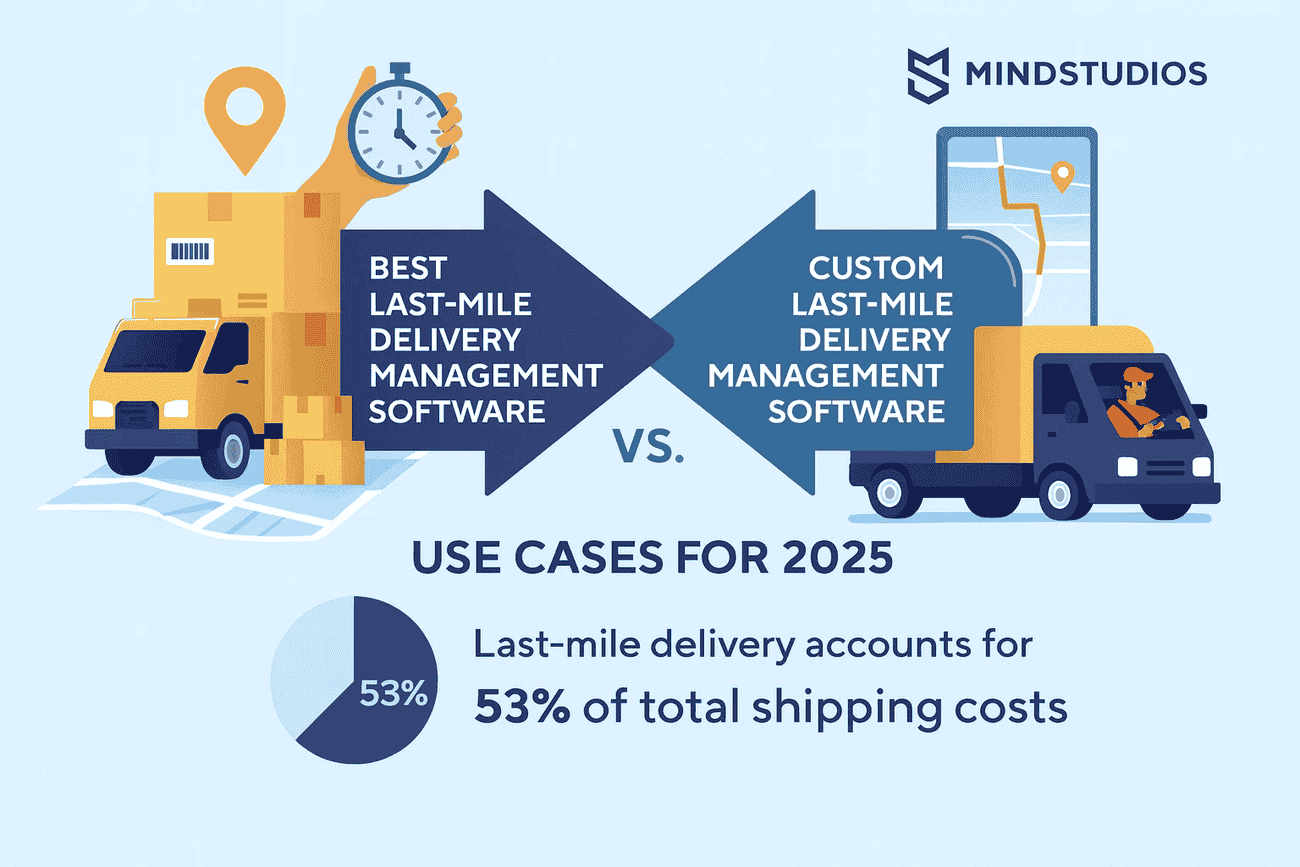
Last-mile delivery accounts for 53% of total shipping costs, making it the most expensive component of the shipping process.
With 44% of consumers willing to wait only two days for orders and over 40% prioritizing fast delivery when shopping online, businesses need sophisticated solutions for route optimization, real-time tracking, and customer communications.
Here are the top 10 last-mile delivery management software solutions for 2025, followed by an analysis of when custom development makes strategic sense.
1. Cigo Tracker
Cigo Tracker positions itself as a comprehensive last-mile tracking solution designed to optimize routes, enhance communication, and streamline deliveries with AI-powered route optimization.
Target market: Small to medium-sized delivery businesses and logistics companies seeking reliable route optimization with strong driver support features.
Competitive edge: 99.95% uptime guarantee with offline capability and a unique digital tipping feature that improves driver satisfaction and retention.
Key limitation: Limited customization options and may require workarounds for businesses with complex integration requirements or unique operational workflows.
2. SmartRoutes
SmartRoutes focuses on making powerful delivery tools affordable for businesses of all sizes, emphasizing cost-effectiveness and comprehensive functionality.
Target market: Small businesses and growing companies that need comprehensive delivery management features without enterprise-level pricing complexity.
Competitive edge: Strong price-to-feature ratio with comprehensive functionality, including route optimization, real-time tracking, and customer notifications at competitive pricing.
Key limitation: May lack advanced analytics and enterprise-grade integrations needed by larger operations with complex reporting requirements.
3. Mind Studios
Mind Studios specializes in developing custom last-mile delivery solutions that address unique operational challenges across industries. Rather than offering one-size-fits-all software, they create tailored platforms that integrate seamlessly with existing business processes.
Key capabilities include:
- Custom fleet management systems with real-time tracking;
- Automated route optimization and dispatch tools;
- Integration with HR and finance systems for comprehensive operational control;
- Industry-specific compliance and security measures.
Target market: Mid-market to enterprise companies with complex operational requirements, unique workflows, or industry-specific compliance needs that standard software cannot address.
Competitive edge: Complete customization capabilities that integrate logistics, HR, and finance systems into unified platforms, enabling operational transformations rather than just software deployments.
Key limitation: Longer implementation timelines and higher upfront investment compared to ready-made solutions, requiring dedicated project commitment and technical resources.
4. RoadWarrior
RoadWarrior delivers straightforward route optimization specifically designed for field sales teams and delivery drivers who need efficient multi-stop routing without complex features.
Target market: Field sales teams, independent contractors, and small delivery operations requiring basic but effective route optimization without advanced features.
Competitive edge: Simplicity and ease of use with immediate value delivery – users can optimize routes within minutes of setup without training or configuration.
Key limitation: Limited scalability and lacks advanced features like customer communication, proof of delivery, or fleet management capabilities needed by growing businesses.
5. Upper
Upper provides a scalable route planning platform designed to serve both individual drivers and multi-driver teams through its dual-product approach: Upper Solo for independent operators and Upper Teams for fleet management.
Core capabilities:
- Spreadsheet import for bulk stop uploads with customizable delivery instructions;
- Smart route optimization algorithms considering distance, time, and traffic conditions;
- Real-time GPS tracking with driver dispatch and crew chat features;
- Automated customer notifications with delivery status updates and ETAs;
- Proof of delivery with photo and signature capture.
Target market: Small to medium-sized delivery businesses seeking an intuitive platform that can scale from solo operations to multi-driver fleets without switching software providers.
Competitive edge: Unique flexibility to support both individual drivers and growing teams within a single ecosystem, plus a free Chrome extension that adds route optimization directly to Google Maps for quick adoption.
Key limitation: May lack some advanced enterprise features like complex workload balancing or industry-specific compliance modules required by larger logistics operations.
6. Circuit
Circuit (now operating as Spoke Dispatch) offers delivery management software designed for multi-driver teams with emphasis on route optimization and real-time tracking capabilities.
Core capabilities:
- Advanced algorithms that test thousands of route combinations in seconds;
- Dynamic route adjustments for last-minute changes and traffic conditions;
- Proof of delivery with photo and signature capture;
- API, Shopify, and Zapier integrations for workflow automation.
Target market: Medium to large delivery operations with multiple drivers requiring comprehensive route management and customer communication tools.
Competitive edge: Advanced algorithms that test thousands of route combinations in seconds with dynamic route adjustments and seamless integration capabilities (API, Shopify, Zapier).
Key limitation: Higher pricing structure and complexity may overwhelm smaller operations, while some users report occasional connectivity issues in poor signal areas.
7. RouteXL
RouteXL provides a cost-effective route planning solution targeting smaller delivery businesses that want to improve efficiency without investing in complex software.
Target market: Small businesses, startups, or occasional users seeking a free or low-cost route optimization without ongoing subscription commitments.
Competitive edge: No-commitment pricing model with free tier for basic needs and straightforward web-based interface requiring no setup or training.
Key limitation: Lacks real-time tracking, customer communication features, and proof of delivery capabilities essential for professional delivery operations.
8. Routific
Routific employs intelligent route optimization that considers human elements alongside traditional routing factors, offering a balance between automation and practical delivery considerations.
Target market: Delivery businesses that prioritize driver experience and want route optimization that accounts for real-world operational factors beyond pure algorithmic efficiency.
Competitive edge: Human-factor consideration in route planning that balances efficiency with driver preferences and practical delivery constraints.
Key limitation: May sacrifice some optimization efficiency for human considerations, and premium features require higher-tier plans that increase the total cost of ownership.
9. OptimoRoute
OptimoRoute focuses on automated planning and workload balancing for multi-driver operations, emphasizing performance optimization for delivery and field service businesses.
Target market: Larger delivery operations and field service companies requiring sophisticated workload distribution, scheduling optimization, and multi-location coordination.
Competitive edge: Advanced automated workload balancing across multiple drivers with sophisticated scheduling algorithms that optimize for both efficiency and service quality.
Key limitation: Complexity may overwhelm smaller operations, and full feature utilization requires significant setup time and ongoing management attention.
10. Onfleet
Onfleet serves as the trusted last-mile delivery platform for thousands of companies across dozens of industries, including courier, food and beverage, retail, e-commerce, furniture, pharmacy, and more.
Target market: Established courier and delivery businesses across multiple industries requiring comprehensive analytics, proven reliability, and extensive integration capabilities.
Competitive edge: Proven track record across diverse industries with advanced analytics, machine learning-powered ETAs, and a comprehensive API ecosystem for complex integrations.
Key limitation: Premium pricing structure and enterprise-focused features may exceed requirements and budget for smaller operations seeking basic delivery management.
11. Intellias
Intellias provides technology consulting and custom software development services, including last-mile delivery solutions tailored for enterprise-level operations requiring complex integrations.
Target market: Large enterprises and technology companies requiring custom-built solutions with sophisticated integrations, advanced technology implementations, and enterprise-grade scalability.
Competitive edge: Full-service technology consulting approach that combines custom software development with strategic technology guidance and enterprise-grade implementation capabilities.
Key limitation: Significant investment requirements and extended project timelines make it unsuitable for companies seeking quick wins or standard delivery optimization needs.
Build vs. buy: Finding the right delivery solution for your business
Choosing between off-the-shelf software and custom development depends on your operational complexity, growth plans, and integration requirements. Here’s how to make the right decision.
When off-the-shelf solutions work best
Ready-made platforms deliver immediate functionality for businesses with standard delivery operations. They offer faster implementation, lower upfront costs, and proven reliability across multiple industries.
Choose off-the-shelf when you need:
- Quick deployment with minimal customization;
- Standard route optimization and customer notifications;
- Basic integration with common e-commerce platforms;
- Predictable monthly costs without development risks.
Most established platforms integrate smoothly with popular systems like Shopify, WooCommerce, and standard payment processors, enabling quick operational improvements.
The custom development advantage
Custom solutions become strategic when your business faces unique challenges that standard software cannot address effectively.
Consider custom development for:
- Complex integration requirements with existing enterprise systems;
- Industry-specific compliance needs (healthcare, pharmaceuticals, regulated industries);
- Unique operational workflows that don’t fit standard patterns;
- Competitive differentiation through proprietary features.
Mind Studios creates tailored delivery solutions that integrate deeply with client operations. Their OÖ Medienlogistik project replaced manual workflows with integrated fleet management, automated payroll, and dispatch optimization – unifying logistics, HR, and finance operations.
Similarly, their James delivery platform demonstrated custom development capabilities by creating real-time order processing with Danish banking integration, automated route optimization, and market-specific features. All delivered within tight deadlines.
Conclusion
Ready-made solutions like Cigo Tracker, SmartRoutes, and Onfleet provide proven functionality for standard delivery requirements, while custom development through providers like Mind Studios addresses unique operational challenges and complex integration needs.
Success depends on accurately assessing your operational complexity, growth trajectory, and integration requirements. The right choice will optimize your delivery operations, enhance customer satisfaction, and position your business for sustainable growth in the competitive delivery market.
Leave a Reply