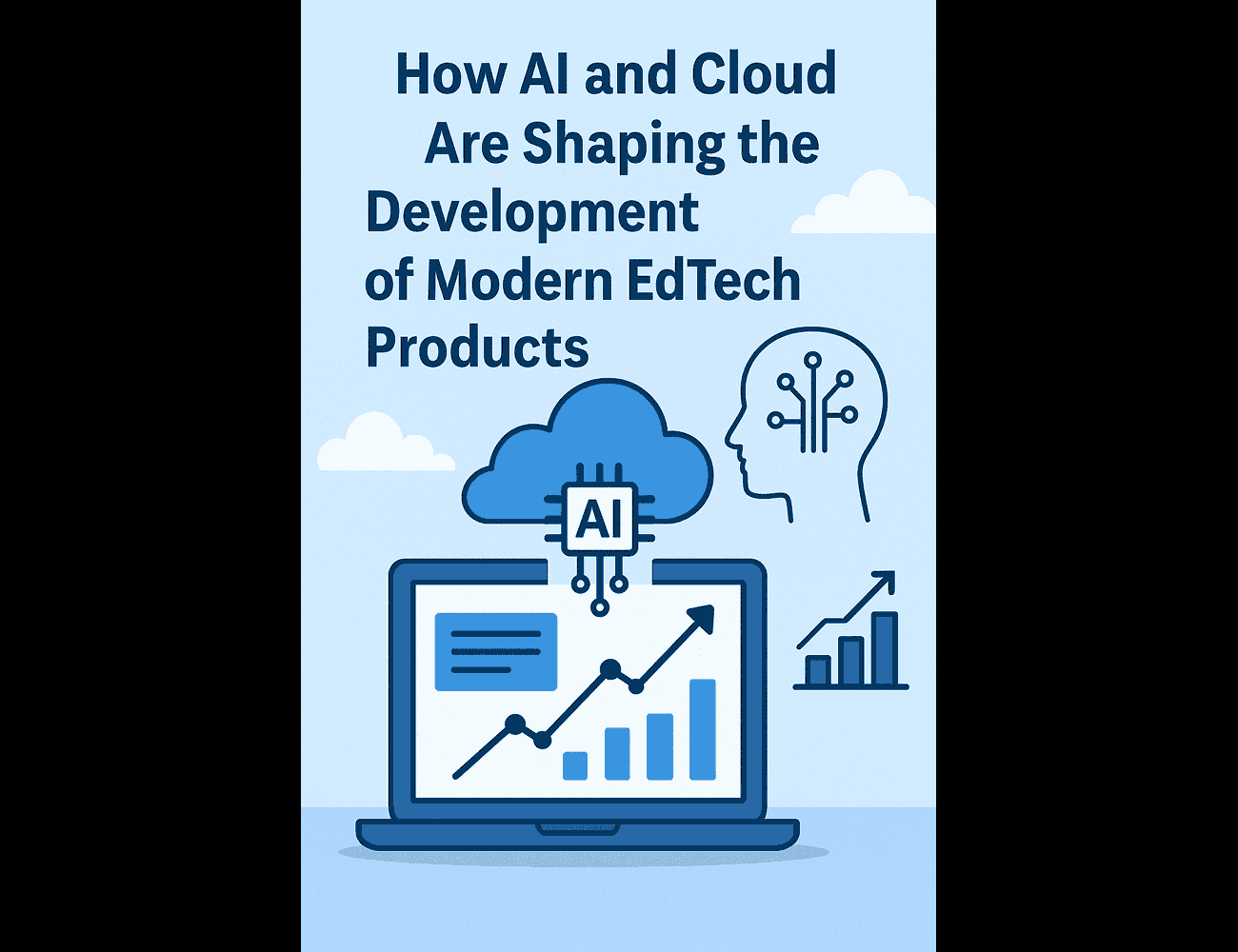
The education technology landscape is entering a new era driven by artificial intelligence (AI) and cloud computing. What once relied on simple online courses or basic corporate LMS portals has now evolved into intelligent, CHI Software, data-driven, and globally accessible digital learning ecosystems. Schools, universities, corporate training departments, and EdTech startups are all adopting modern architectures that combine AI-driven personalization with the scalability of the cloud.
For businesses, this transformation is not only technological but strategic. Cloud platforms allow companies to reduce operational costs and scale quickly, while AI introduces automated assessments, personalized learning paths, and advanced analytics. As a result, EdTech organizations can deliver better learning outcomes, improve engagement, and build stronger revenue models.
This article explores how AI and cloud technologies reshape the development of EdTech products, what business benefits they bring, and which companies are developing similar systems today.
Cloud Technology: The New Backbone of EdTech Platforms
1. Unlimited Scalability for Growing User Bases
EdTech platforms often face unpredictable usage spikes—such as exam seasons, new enrollment periods, or corporate onboarding cycles. Traditional on-premise systems frequently fail under such pressure. Cloud infrastructure, however, allows automatic scaling, meaning the system can instantly adjust capacity to meet demand.
This enables EdTech companies to:
- Launch large-scale programs with confidence
- Serve thousands of concurrent learners
- Eliminate downtime and performance issues
- Avoid expensive hardware investments
With cloud elasticity, businesses can grow their user base without rewriting or restructuring their systems.
2. Lower Costs and Better Resource Management
Cloud solutions convert huge upfront capital expenditure into manageable operational costs. Providers like AWS, Azure, and Google Cloud handle security, servers, updates, and backups—allowing EdTech companies to focus entirely on product innovation.
Additionally, cloud pay-as-you-go models prevent resource waste. Teams pay only for the server time, storage, and computational power they actually use. This is especially beneficial for training AI models, which require large but temporary computational resources.
3. Faster Development and Deployment Cycles
Cloud platforms offer tools such as:
- Serverless computing
- Managed databases
- Automated CI/CD pipelines
- Container orchestration
- Integrated monitoring and analytics
These tools reduce the development time dramatically. Teams can deploy updates in minutes, test new features without risking stability, and roll back quickly if needed. This rapid iteration allows EdTech companies to stay ahead of competitors and continuously enhance learner experience.
AI Technologies Reshaping Modern Learning Systems
1. Personalized Learning Through Intelligent Algorithms
One of the biggest contributions of AI to EdTech is real-time personalization. AI systems analyze a student’s behavior, performance, speed, and preferences. Based on these insights, platforms automatically:
- Adjust lesson difficulty
- Recommend additional resources
- Change the sequence of topics
- Offer targeted practice exercises
This tailored approach increases engagement and supports each learner’s unique journey. Businesses benefit from improved retention rates and higher customer satisfaction.
2. Automated Assessment and Smart Feedback
Manual grading becomes impractical when dealing with thousands of students. AI-driven assessment tools can evaluate:
- Quizzes
- Coding challenges
- Mathematical problems
- Multichoice tests
- Written assignments (via NLP)
Instant feedback not only enhances learning but also reduces the workload of instructors. For corporate training, this ensures faster skill assessment and better tracking of employee progress.
3. Predictive Analytics for Better Decision-Making
AI-powered analytics deliver insights that were previously impossible or extremely time-consuming to obtain. These analytics help institutions and businesses understand:
- Which learners are struggling
- Which topics generate most difficulty
- How learning paths affect outcomes
- When intervention is needed
Predictive tools help reduce dropout rates, optimize content strategies, and support administrators in making data-driven decisions.
4. AI-Assisted Content Development
Generative AI tools, often built and customized through expert AI development services, streamline the creation of educational content. They assist in producing:
- Study material
- Quiz banks
- Summary notes
- Course descriptions
- Multilingual content for global markets
This allows EdTech companies to update or expand content faster, significantly reducing production costs and accelerating product time-to-market.
Business Benefits of AI + Cloud Integration in EdTech
| Benefit Area | Description |
| Cost Reduction | Cloud eliminates hardware costs and minimizes maintenance expenses |
| Faster Expansion | Systems scale effortlessly to serve new regions or institutions |
| Innovation Speed | AI and cloud shorten development cycles and support rapid updates |
| Enhanced Engagement | Personalized learning increases retention and student outcomes |
| Global Market Reach | Cloud hosting enables seamless worldwide access |
| Stronger Analytics | AI delivers insights for refining courses and improving effectiveness |
| High-Value Monetization | Premium AI features and analytics create new revenue streams |
These advantages create a competitive edge for EdTech businesses seeking growth, sustainability, and long-term profitability.
Challenges and Considerations for EdTech Businesses
1. Student Data Security and Compliance
Handling student information requires strict adherence to privacy regulations such as GDPR, COPPA, and FERPA. Cloud providers offer strong security features, but product teams must implement:
- Encryption
- Access control
- Secure authentication
- Data minimization policies
Clear transparency in data usage is essential to maintain trust.
2. AI Model Fairness and Transparency
Institutions increasingly demand ethical AI. Developers must ensure:
- Models are unbiased
- Algorithms are explainable
- Predictions are auditable
- Data sources are well-documented
This reduces the risk of unfair results in assessments or recommendations.
3. Cloud Cost Monitoring
Uncontrolled AI training jobs or high traffic can lead to unexpected cloud bills. Businesses need:
- Budget alerts
- Autoscaling rules
- Cost dashboards
- Resource usage reports
This keeps expenses predictable and manageable.
4. Keeping Up With Institutional Policy Changes
As generative AI becomes more common in education, academic policies regarding assessments and content integrity continue to evolve. EdTech platforms must update features, assessment methods, and content to align with changing standards.
Implementation Roadmap for Building Modern EdTech Products
- Define core use cases where AI adds clear measurable value.
- Adopt a cloud-native architecture using microservices and managed services.
- Implement robust data governance to ensure privacy and security.
- Use analytics to measure learning outcomes and adjust content.
- Continuously optimize the system through A/B testing and user behavior analysis.
- Monitor AI models regularly to ensure fairness, accuracy, and compliance.
- Scale globally using multi-region cloud deployment and multilingual content.
Companies Developing Similar AI and Cloud-Powered EdTech Solutions
Several global and specialized companies are actively building AI-driven educational systems. These include:
- Large EdTech platform providers that create digital classrooms, LMS systems, and interactive learning tools.
- AI-focused companies developing adaptive learning engines, automated grading, and predictive analytics.
- Custom development firms creating full EdTech platforms for clients. One such example is chatbot for educational institutions, an educational software development company experienced in cloud-native EdTech solutions, intelligent tutoring systems, and AI-powered learning applications.
These companies help educational institutions and startups design products that are scalable, secure, and future-ready.
Conclusion
AI and cloud technologies are transforming the EdTech industry at every level—from personalized learning experiences to fully scalable global platforms. These innovations allow businesses to deliver meaningful educational outcomes while reducing costs and improving efficiency. Companies that embrace AI and cloud early gain significant competitive advantages and are better equipped to serve the evolving needs of learners.
Leave a Reply