

The average organization will manage over 275 SaaS tools by 2025 — yet most IT teams still struggle to turn technology spending into real business outcomes. Despite massive investment, 70% of digital transformation initiatives fail to meet their goals.
The gap isn’t technology. Its execution.
High-performing IT teams see up to 35% higher revenue growth and 10% better margins, largely because they measure the right metrics, optimize their systems, and remove barriers that slow adoption.
In this article, we break down proven, practical strategies IT teams can use to improve ROI in 2025 — from reducing onboarding time to automating support and optimizing product usage. These evidence-based methods work for teams of any size and deliver measurable financial impact.
Understanding ROI in IT Teams
ROI is the foundation of strategic decisions in every department, but IT teams face unique challenges when applying this concept.
What ROI means in the context of IT
ROI in IT shows the measurable benefits that organizations get from their technology investments. The basic calculation divides net profit by investment cost to get a percentage. But IT ROI goes beyond this simple math.
IT ROI is different from traditional investments because it covers both financial returns and strategic value that might not show up right away in financial statements. IT teams need to assess their investments from multiple angles:
- Financial metrics – including payback period, cost savings, and revenue growth
- Operational improvements – such as better productivity and fewer errors
- Strategic advantages – like state-of-the-art capabilities or happier customers
IT ROI basically measures how well technology investments support business goals. Companies spend 12-15% of their budgets on IT, so the stakes are high. Understanding these returns helps teams pick the right investments and focus on projects that bring the most value.
Why ROI is hard to measure in digital transformation
Digital transformation makes measuring ROI tricky. Research shows that all but one of these organizations struggle to measure returns on their digital investments accurately.
There are several reasons for this:
Digital transformation improves many parts of the business at once. It’s not like buying a server where you can easily calculate costs and benefits – these initiatives affect many departments at the same time.
Many benefits are hard to measure. Better customer satisfaction, faster feedback, and improved communication create real value but aren’t easy to put into numbers.
Digital transformation also needs constant measurement instead of one-time calculations. Markets and technologies keep changing, so organizations must keep checking their returns and adjust their strategies when needed.
The biggest problem is capturing both immediate gains and long-term strategic benefits. That’s why 75% of executives say they struggle to measure the real impact of digital transformation.
Key Metrics to Track IT ROI
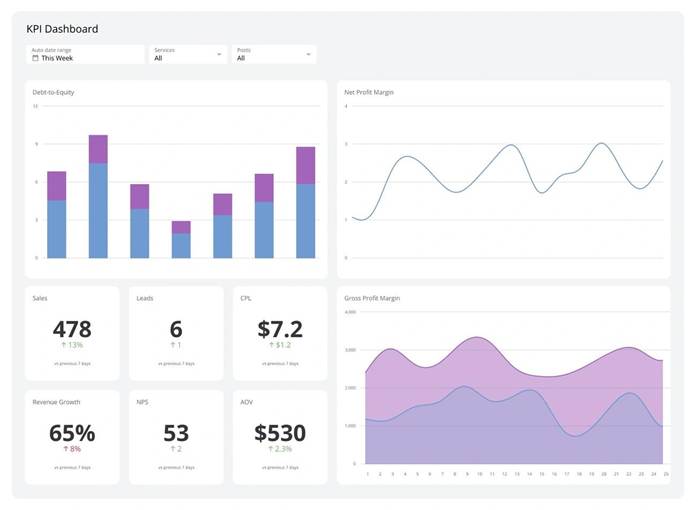
The right metrics play a vital role in evaluating IT investments. McKinsey research shows that enterprises with high-performing IT organizations achieve up to 35% higher revenue growth and 10% higher profit margins. Here are the metrics that matter most to improve ROI.
Payback period and NPV
Payback period shows how long an investment takes to recover its original cost and provides a simple assessment of liquidity and risk. A project with a USD 1 million investment that saves USD 250,000 annually would have a payback period of four years.
Net Present Value (NPV) fills the gaps in payback period analysis by factoring in the time value of money and discounting future cash flows to their present value. NPV gives a complete analysis by tracking all cash inflows and outflows throughout a project’s lifetime.
Time-to-proficiency and task completion rate
Time-to-proficiency shows how quickly employees become fully competent after training. This KPI helps evaluate training program effectiveness and shows how fast employees reach their peak productivity.
Task completion rate measures the percentage of key workflows that teams complete without errors. Companies can use this metric to spot bottlenecks, create efficient processes, and build accountability within teams.
Cost visibility and telecom optimization
Better cost visibility helps organizations reinvest 30 percent of IT spend through productivity gains. Cloud expenses continue to grow 20 to 30 percent each year due to unused capacity and limited insight into how resources are consumed. Many organizations still overlook recurring communication and connectivity costs, which also rise quickly when not monitored.
Using telecom expense management services allows companies to eliminate redundant lines, negotiate stronger contracts, and automate invoice validation at scale. These improvements strengthen long-term financial efficiency instead of offering only one-time reductions, giving IT teams clearer control over spending and more room to invest in strategic initiatives.
Revenue lift and data error rate
Revenue metrics track how digital initiatives boost top-line growth, including digital channel contribution and reduced customer acquisition costs. Companies that successfully implement digital transformation typically see 10-20% higher revenue within 24-36 months.
Data error rates shape decision quality and operational efficiency. Companies track metrics like pipeline uptime, mean time to repair, and backfill frequency to ensure reliable data supports accurate decisions and improves ROI across initiatives.
Common Barriers to ROI in IT Teams
Technology implementations can fail even with the best design. IT teams struggle with major obstacles that hurt ROI beyond picking the right metrics. Teams need to understand these barriers before they can overcome them.
Low user adoption of new tools
User adoption makes or breaks many implementation projects – a factor leadership often overlooks. McKinsey research shows 70% of digital transformation efforts fail because users resist change and don’t adopt new systems. New systems never deliver the predicted boost in productivity when employees don’t use them properly.
This creates a ripple effect throughout the organization. Employees lose up to 22 minutes each day searching for information or fixing software problems. This adds up to more than two working weeks every year. Organizations end up spending way more on IT support when adoption rates stay low, which takes resources away from other vital projects.
Disconnected strategy and execution
Teams run into strategy execution problems when IT leaders’ plans don’t match daily operations. Communication breaks down between people who develop strategic plans and the teams that need to carry them out.
This hits companies hard. Fortune 500 companies waste about 2.4 billion hours yearly looking for project information. Business goals stay out of reach when communication channels aren’t clear and important details get lost or mixed up.
Skill gaps and lack of training
Nine out of ten organizations will face IT skill shortages tied to digital transformation by 2025. These shortages will cost over USD 6.50 trillion worldwide from delayed products, unhappy customers, and missed opportunities.
HR professionals worry about alternative credentials – 54% say they can’t tell what skills were tested or how well. Companies pay a high price for skipping training. Replacing IT staff costs between 50-200% of their yearly salary.
Manual outreach and inefficient sales support
Sales teams often use their resources poorly. Representatives spend 66% of their time on tasks that do not generate revenue. Follow-ups are missed, timing slips, and pipeline visibility breaks down when everything depends on manual effort. Introducing automation through an AI SDR solution can immediately reduce these inefficiencies by managing repetitive outreach tasks, improving follow-up accuracy, and keeping opportunities active without extra strain on the team.
Companies with the strongest sales ROI place 50 to 60 percent of their sales employees in support roles. This structure allows customer-facing staff to focus on relationship-building and strategic conversations. Top performers see their sales reps generate USD 5.7 million in gross margin, while others reach only USD 1.7 million, largely due to differences in operational efficiency and automation maturity.
4 Proven Strategies to Improve ROI in 2025
IT teams have discovered several practical solutions that yield measurable success after identifying ROI barriers.
1. Use in-app guidance to reduce onboarding time
Interactive support within applications helps users exactly when they need it. Studies show this state-of-the-art approach cuts onboarding time by up to 50% and boosts productivity. To cite an instance, a major U.S. airline’s engineers reduced their training time by 70% with hands-on guides merged into their actual workflows.
The adoption rates jump by 32% with in-app guidance, which maximizes software investments. Users learn through non-blocking pop-up windows that teach proper tool usage without workflow disruption.
2. Automate support with self-service tools
Users can solve common problems on their own through self-service automation, which reduces support tickets by 15-60%. Our research shows 61% of customers would rather handle simple issues themselves. Support teams can then focus on complex problems.
Organizations can build complete knowledge bases through API integration that users access via chatbots or help portals. One organization saved 5,000 support hours by deflecting 20,000 tickets in a single year.
3. Train in sandbox environments before go-live
Teams need isolated, risk-free spaces to practice with new systems before implementation. These controlled replicas let employees test features and workflows without affecting production systems.
Technical professionals prefer real-life application 67% of the time when learning new technology. Sandbox training makes the learning curve shorter through hands-on simulation. Teams can follow compliance processes before launch while minimizing disruption.
4. Track usage with product analytics to optimize systems
Product analytics shows how users actually participate with systems—not their perceived actions or team assumptions. Teams can learn which features need improvement, identify valuable functions, and spot user friction points with this informed approach.
Analytics helps organizations track user activity, measure task completion rates, and find exact drop-off points. Teams can optimize systems continuously, demonstrate adoption effects with solid data, and maintain ROI well after implementation.
Conclusion
Improving IT ROI in 2025 requires more than implementing new tools — it demands better adoption, smarter measurement, and continuous optimization. The most successful teams use four proven strategies: in-app guidance, support automation, sandbox training, and product analytics. Together, these methods reduce friction, increase user adoption, and deliver measurable financial gains.
The formula is simple:
Right technology + skilled users + accurate data = sustained ROI.
Organizations that prioritize user experience, track real usage metrics, and refine their systems over time will consistently outperform those that rely on outdated methods. The path is clear — invest in adoption, measure what matters, and optimize continuously to unlock the full value of your IT portfolio.
Leave a Reply