
Modern marketing moves fast, and your content needs to keep up.
From blog posts and landing pages to product launches and campaign microsites, marketers need tools that help them create, publish, and measure content without relying too much on developers.
That’s where the right content management system can become your biggest advantage.
A great CMS for marketers balances ease of use, collaboration, analytics, and scalability. It should connect seamlessly to your CRM, email platform, analytics stack, and automation tools, all while keeping your brand experience consistent across every channel.
We’ve rounded up the top 10 CMS platforms tailored to marketers, each with its specific use case, so you can quickly find your perfect match.
TL;DR
- WordPress. The most flexible, SEO-friendly CMS with endless plugins, ideal for content-heavy teams who want full control and customization.
- Hygraph. A composable, API-first CMS built for omnichannel delivery, perfect for data-driven teams and scalable digital ecosystems.
- Wix Studio. A fast, intuitive platform for small teams and agencies, offering strong built-in SEO, automation, and design tools with minimal setup time.
- Webflow. A visually driven CMS that lets marketers design, build, and launch stunning pages quickly, without needing engineering support.
- HubSpot CMS. A unified CMS + CRM platform that gives marketers end-to-end personalization, automation, and analytics without relying on developers.
- Ghost. A streamlined, content-first CMS that combines blogging, newsletters, and audience analytics in a clean, distraction-free workspace.
- Marketo Engage. A CMS + advanced automation powerhouse that ties content directly to customer data, enabling deep personalization and full-funnel tracking.
- Contentful. An enterprise-ready headless CMS that centralizes global content operations and powers multi-platform campaigns at scale.
- Squarespace. A simple, all-in-one website builder designed for small teams that need to ship polished, on-brand marketing pages quickly.
- Craft CMS. A customizable CMS offering tight control over content modeling and SEO, great for brands needing flexibility and a developer-friendly foundation.
Why Your CMS Might Be the Most Important Tool in Your Marketing Strategy
Your CMS is the foundation of your marketing engine. The platform you choose shapes how quickly you launch campaigns, test ideas, and adapt to audience behavior.
Accelerate Your Campaign Workflow
A modern CMS can shorten campaign timelines from weeks to days. With built-in automation and CRM integrations, marketers can personalize landing pages or emails instantly, no dev tickets needed.
On the flip side, a slow or outdated CMS can block progress, delay launches, and limit creative testing.
Uncover Insights and Improve Performance
If analytics and ROI drive your decisions, your CMS should connect seamlessly to tools like GA4, HubSpot, or your CRM. A system with native tracking and data integrations gives you visibility into what converts (and what doesn’t) across every channel.
Strengthen Your Search Presence
For inbound marketing and organic growth, your CMS should support structured content, schema markup, as well as technical and local SEO settings.
These features help your brand rank better, adapt to zero-click searches, and stay competitive in search visibility.
Deliver Consistent Experiences Everywhere
If your strategy spans multiple touchpoints (websites, email, and apps), a headless or composable CMS can be a game-changer. It allows content reuse across channels without redesigning everything from scratch, keeping your messaging consistent everywhere.
For example, for teams focused on effective B2B marketing healthcare strategies, the right CMS can simplify multi-stakeholder approvals, support compliance requirements, and unify messaging across every touchpoint. Meanwhile, teams in the beauty niche can leverage that same CMS agility to scale creative experimentation, launch trend-driven content quickly, and maintain a consistent brand experience across all channels.
To sum up, your CMS determines how agile, data-driven, and scalable your marketing can be.
Choose a platform that aligns with your goals and team workflow, one that helps you publish faster, measure smarter, and hit your growth targets consistently.
1. WordPress

WordPress remains the most flexible CMS for marketers who want full control. Its vast plugin ecosystem makes it easy to run blogs, landing pages, and campaigns that convert.
You can optimize SEO, integrate analytics, and automate publishing with no heavy setup. It’s the ideal choice for content-driven teams who rely on organic reach and brand storytelling.
Why it’s great for marketers: Deep SEO tools, easy integrations, and complete control over your content.
Notable integrations: Yoast SEO, GA4 & GTM, HubSpot, Mailchimp, Semrush, Elementor, Zapier, and CRM plugins.
Strengths: Huge plugin ecosystem, SEO flexibility, and community support.
Challenges: Requires ongoing updates and occasional developer help.
2. Hygraph
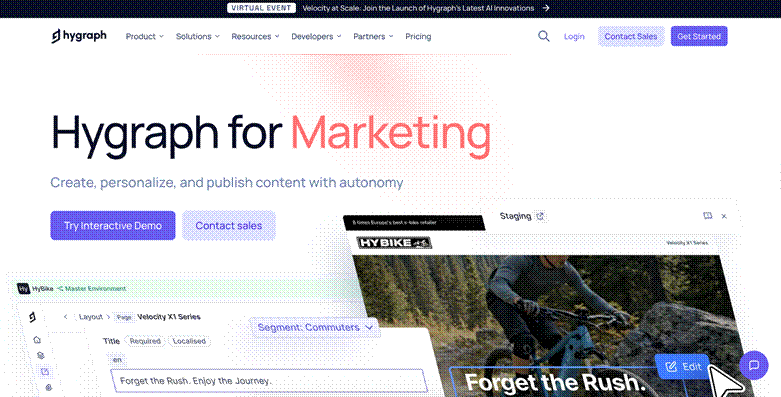
Hygraph empowers marketing and development teams to collaborate in a composable architecture. It centralizes content and delivers it to any platform: web, app, or campaign.
With GraphQL APIs, marketers can automate personalization and analytics workflows. It’s best suited for data-driven organizations building scalable, future-ready experiences.
Why it’s great for marketers: Supports omnichannel marketing, analytics integrations, and structured content reuse.
Notable integrations: Segment, GA4, Snowplow, Mixpanel, HubSpot, Salesforce, and Looker.
Strengths: API-first, scalable, and composable by design.
Challenges: Needs developer setup for initial implementation.
3. Wix Studio
Wix Studio (the professional edition of Wix) brings flexibility and simplicity to modern marketers. Its drag-and-drop builder and responsive templates make it fast to launch landing pages or client sites.
Built-in SEO, analytics, and automation tools reduce the need for extra plugins. It’s ideal for small teams and agencies that need to move quickly between multiple projects.
Why it’s great for marketers: Combines speed, simplicity, and automation tools to streamline campaign creation.
Notable integrations: GA4, Facebook Pixel, HubSpot, Zapier, Mailchimp, and Google Ads.
Strengths: Easy setup, intuitive UI, and strong built-in marketing features.
Challenges: Limited backend flexibility for advanced customization.
4. Webflow

Webflow gives marketers the creative freedom to design, build, and publish visually, without code. Campaign pages, microsites, and landing pages can go live in hours instead of days.
Its built-in SEO and performance tools keep sites fast and discoverable. For marketing experts and teams that value both speed and design control, Webflow is a perfect middle ground.
Why it’s great for marketers: Real-time publishing, strong SEO controls, and easy integration with analytics tools.
Notable integrations: GA4 & GTM, Hotjar, Fathom Analytics, HubSpot, Zapier, and Meta pixels.
Strengths: Visual editing freedom, fast design-to-publish workflows, and a strong CMS core.
Challenges: Slight learning curve for non-designers.
5. HubSpot CMS
HubSpot CMS unifies your website, CRM, and marketing automation into one seamless system.
It lets marketers personalize pages, track engagement, and connect every lead back to a contact record.
Built-in analytics reveal exactly which campaigns drive results. For teams focused on inbound marketing, HubSpot CMS keeps content, data, and performance under one roof.
Why it’s great for marketers: Built-in personalization, A/B testing, SEO optimization, and end-to-end analytics.
Notable integrations: HubSpot Marketing Hub, Salesforce, Google Analytics, Hotjar, Zapier, LinkedIn Ads, and Google Ads.
Strengths: All-in-one marketing and CRM integration, personalization, analytics.
Challenges: Higher cost than basic CMS tools, less flexible for developers.
6. Ghost
Ghost focuses on content-first marketing, giving writers and creators a distraction-free publishing space. It combines blogs, newsletters, and subscriptions in a single dashboard.
Built-in analytics and SEO tools help track performance without third-party plugins. For brands that grow through thought leadership and audience loyalty, Ghost is a clean and efficient solution.
Why it’s great for marketers: Combines blogging, newsletters, and audience analytics without extra plugins.
Notable integrations: GA4, Stripe, Zapier, Mailchimp, ConvertKit, Hotjar, and Fathom Analytics.
Strengths: Simplicity, built-in newsletters, and SEO-friendly publishing.
Challenges: Limited design flexibility for complex brand websites.
7. Marketo Engage
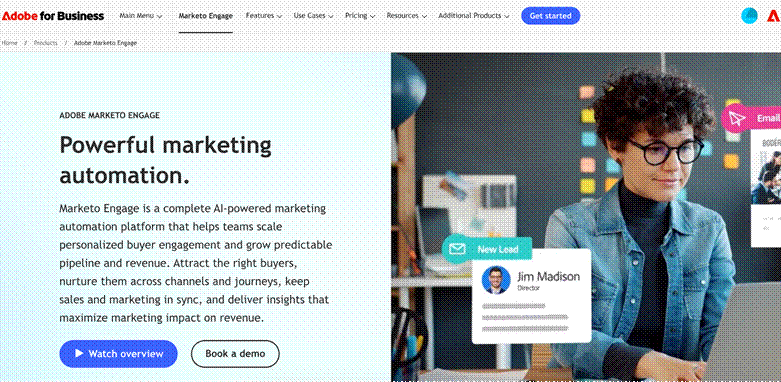
Marketo Engage by Adobe combines CMS functionality with powerful marketing automation. It lets marketers create personalized landing pages, manage campaigns, and track lead behavior in one platform.
Every content interaction is tied directly to customer data, helping teams measure performance across the full funnel. For marketers focused on automation and lead nurturing, Marketo makes campaign management seamless.
Why it’s great for marketers: Unites content, automation, and analytics in a single environment for better ROI tracking.
Notable integrations: Adobe Experience Cloud, Salesforce, GA4, LinkedIn Ads, Zapier, HubSpot, and Microsoft Dynamics.
Strengths: Advanced automation, CRM integrations, personalization, and strong analytics.
Challenges: Steeper learning curve and higher pricing for smaller teams.
8. Contentful
Contentful is a headless CMS built for scalability and multichannel marketing. It separates content from presentation, letting teams manage global campaigns across websites, apps, and digital products.
With structured content and API integrations, marketers can personalize experiences at scale. It’s the go-to choice for enterprises that prioritize flexibility and long-term content strategy.
Why it’s great for marketers: Centralized content workflows, enterprise-grade analytics, and scalable omnichannel delivery.
Notable integrations: GA4, Segment, HubSpot, Salesforce, Marketo, Optimizely, and custom BI connectors.
Strengths: Headless flexibility, scalability, and governance for complex teams.
Challenges: Steeper learning curve for non-technical marketers.
9. Squarespace
Squarespace is built for simplicity, combining design, content, and analytics in one platform. Marketers can launch polished campaign pages, manage email lists, and track performance without extra tools.
Its templates are visually consistent and easy to customize for any brand. Perfect for small teams or personal brands that need to move fast and look professional.
Why it’s great for marketers: SEO tools, integrated email marketing, and real-time analytics in a simple interface.
Notable integrations: GA4, Google Ads, Mailchimp, Zapier, Meta Pixel, LinkedIn Insights, and Stripe.
Strengths: All-in-one simplicity, elegant design templates, built-in analytics and email.
Challenges: Less flexibility for large-scale or enterprise content operations.
10. Craft CMS
Craft CMS gives marketing teams precision control over content structure and design. It’s flexible enough for developers yet intuitive enough for non-technical editors.
Teams can manage traditional SEO and AI search optimization, multi-language campaigns, and advanced content modeling without heavy plugins.
For brands that need creative freedom with technical stability, Craft CMS strikes the perfect balance.
Why it’s great for marketers: Clean editing interface, strong SEO management, and flexible integrations for content strategy.
Notable integrations: GA4 & GTM, Mailchimp, HubSpot, Algolia, Cloudflare, and Vercel.
Strengths: Developer-friendly, scalable, and customizable for brand-specific experiences.
Challenges: Requires developer setup for complex builds and integrations.
Conclusion
Choosing the right CMS in 2026 depends on your team’s size, goals, and marketing maturity.
Each platform has its own strengths, the key is aligning them with how your marketing team actually works.
Here’s a quick guide to help you decide, choose:
- HubSpot CMS if you want an all-in-one marketing, CRM, and automation platform.
- WordPress if content marketing, SEO, and full creative control are your top priorities.
- Webflow if you need design freedom and fast campaign deployment without coding.
- Contentful if you’re managing content at enterprise scale across multiple channels.
- Ghost if your strategy centers around content, newsletters, and community growth.
- Hygraph if you’re building a composable, data-driven marketing infrastructure.
- Squarespace if you’re a small team or solo marketer who values simplicity and speed.
- Marketo Engage if your marketing revolves around automation, lead scoring, and CRM analytics.
- Craft CMS if you need a custom marketing website with developer flexibility.
- Wix Studio if you’re a small agency or marketing team managing multiple projects quickly.
Just remember, the best CMS is the tool that helps your team move faster, test ideas easily, and connect every piece of content to measurable results.
Leave a Reply